

A ceiling stain after rain can leave you wondering whether you need a small repair or an entirely new roof. If there is a pipe sticking through the roof nearby, its flashing is worth checking—but its location alone does not prove where the water entered.
A suspected vent-pipe leak calls for an inspection, not an automatic replacement recommendation. The useful questions are straightforward: What failed? How much of the surrounding roof is affected? What work would address the identified problem?
For homeowners in Summerville and the surrounding Lowcountry, this guide explains how to prepare for that conversation and what to look for in a repair estimate.
What is a pipe boot, and why can it leak?
A pipe boot or pipe flashing helps protect the opening where a plumbing vent passes through the roof. Depending on the assembly, it may include a collar or flexible seal around the pipe.
Damaged or deteriorated flashing, a failing collar, or improper installation can allow water into that junction. Nearby shingles also deserve attention. GAF’s guide to roof vent pipe leaks explains why the whole penetration area needs professional evaluation.
“Pipe boot repair” is therefore a starting description, not a complete scope of work. Ask which component the roofer believes has failed and what evidence supports that conclusion.
A ceiling stain is a clue, not a diagnosis
Water can travel before it becomes visible indoors. A stain near a bathroom, for example, does not establish that the roof pipe above it is the source. GAF emphasizes this difficulty in its homeowner leak guidance.
Describe what you see without feeling that you must diagnose it yourself. “The stain appeared after rain and has grown since last week” is more useful than deciding in advance that one specific part needs replacing.
If an earlier repair did not resolve the problem, provide the invoice and any photographs. Ask the inspector to explain whether the current evidence supports the same diagnosis or points elsewhere. You want a recommendation connected to the observed conditions, with uncertainty explained clearly.
What to record before your roof inspection
You do not need to climb onto the roof to prepare. Stay on the ground or in safely accessible indoor areas; leave roof access to the contractor. Keep people away from a bulging ceiling or water near electrical fixtures, and seek appropriate professional help for those hazards.
Put together a short record:
- Location: Identify the room and the stain’s position within it.
- Timing: Note when you first saw it and whether it changes during rain.
- Photographs: Take a wide indoor view and a closer view from a safe position. Date them so changes are easier to compare.
- History: Gather earlier repair records and the approximate roof installation date, if known.
- Access information: Mention anything that may affect the visit, such as locked gates or limited parking.
It is fine if you do not know the roof’s age or the part’s name. Say what is unknown. Avoid turning an estimate request into guesswork about products or damage you cannot see.
A real HopeStar inspection example
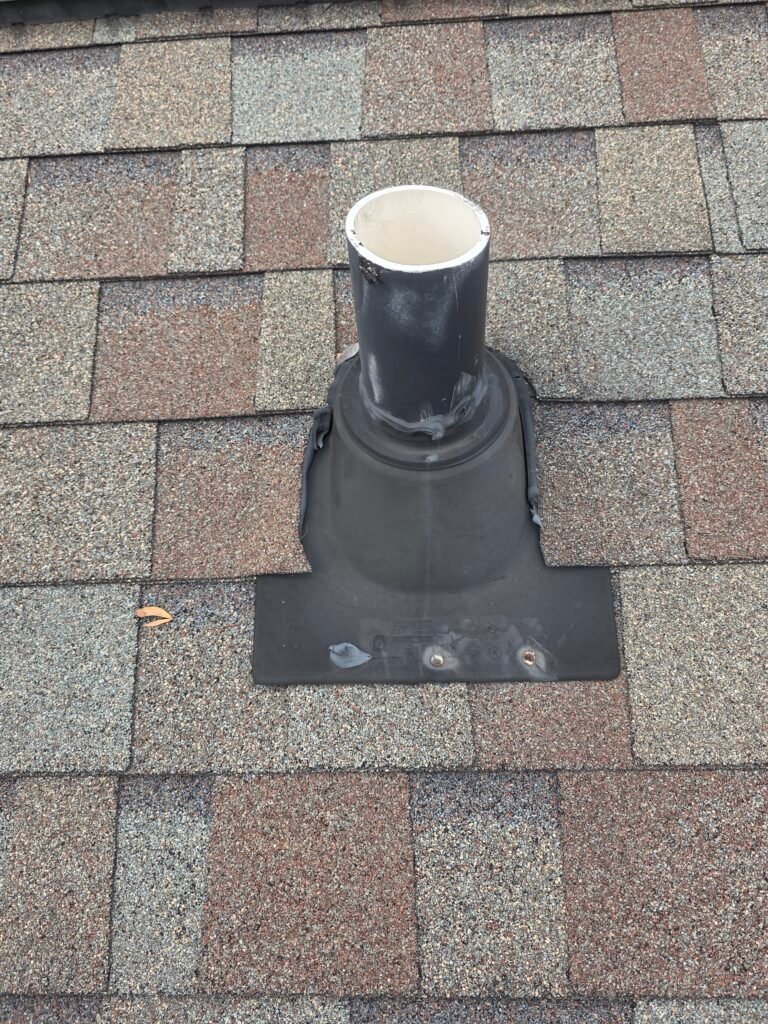
HopeStar’s Summerville roof repair and replacement page includes an actual inspection photograph of a vent pipe and surrounding roof area. The accompanying explanation describes examining the seal, flashing, fasteners, and nearby shingles together.
That is an inspection example—not a documented before-and-after repair or proof that every similar-looking roof has the same problem. Its value is showing the area that needs attention, rather than treating the visible pipe as the entire issue.
For your own home, ask to see photographs that relate to your inspection. Have the contractor distinguish the condition observed from the proposed work. You should be able to understand why each recommended item appears in the estimate.
When repair may make sense—and when to discuss replacement
HopeStar’s published repair guidance explains that a localized repair may be practical when the damage is limited and the surrounding roof remains serviceable. Wider deterioration, recurring leaks, or several problem areas may justify discussing replacement. An inspection determines which situation applies.
Ask for a plain-language answer to two questions: “What can this repair address?” and “What concerns would remain afterward?” A useful recommendation should help you understand its limits, not just its price.
The repair also needs an appropriate product and installation method. GAF’s pipe-boot repair guidance stresses confirming the source and following installation instructions. A proposed bead of sealant is not, by itself, an explanation of how the underlying problem will be corrected.
If replacement is recommended, ask what findings make a limited repair unsuitable. You can review HopeStar’s broader roofing services while considering the options, but the decision should remain specific to your roof.
Six questions for a vent-pipe repair estimate
Before approving work, make sure the written proposal answers these questions:
- What is the diagnosed problem? Ask the contractor to identify the affected penetration and explain the evidence. If further investigation is needed, have that stated separately.
- What will be repaired or replaced? Request an itemized description of the boot, flashing, adjacent shingles, or other components included. A label such as “fix leak” leaves too much unclear.
- Which materials are proposed? Ask for the product or assembly description and why it is suitable for the roof. Avoid assuming every boot or flashing has the same application requirements.
- How will unexpected findings be handled? Agree on how additional work will be documented, priced, and approved if opening the area reveals conditions not included initially.
- What is outside the scope? Clarify whether interior ceiling work, painting, or other trades are excluded. Keep the roof repair and any separate restoration work easy to distinguish.
- What happens after the work? Request any applicable workmanship or product warranty terms in writing, along with the contact process if the leak recurs. Do not assume a particular coverage period.
These questions help you compare the proposed work rather than choosing between two totals that may describe different repairs. Keep the estimate, inspection photographs, and final invoice together for future reference.
Request a roof leak inspection in the Lowcountry
Have a recurring ceiling stain or a suspected leak around a roof pipe? Contact HopeStar Roofing to discuss an inspection and request a written roof estimate. Explain what you have noticed, where the home is located, and any previous repair attempts.
Whether you are in Summerville, Goose Creek, North Charleston, Charleston, or a nearby Lowcountry community, start with the condition of your roof—not a guess about needing replacement.
Call (843) 999-8239 or request your free roof estimate. Ask HopeStar to explain the findings, available options, and proposed scope before you approve the work.